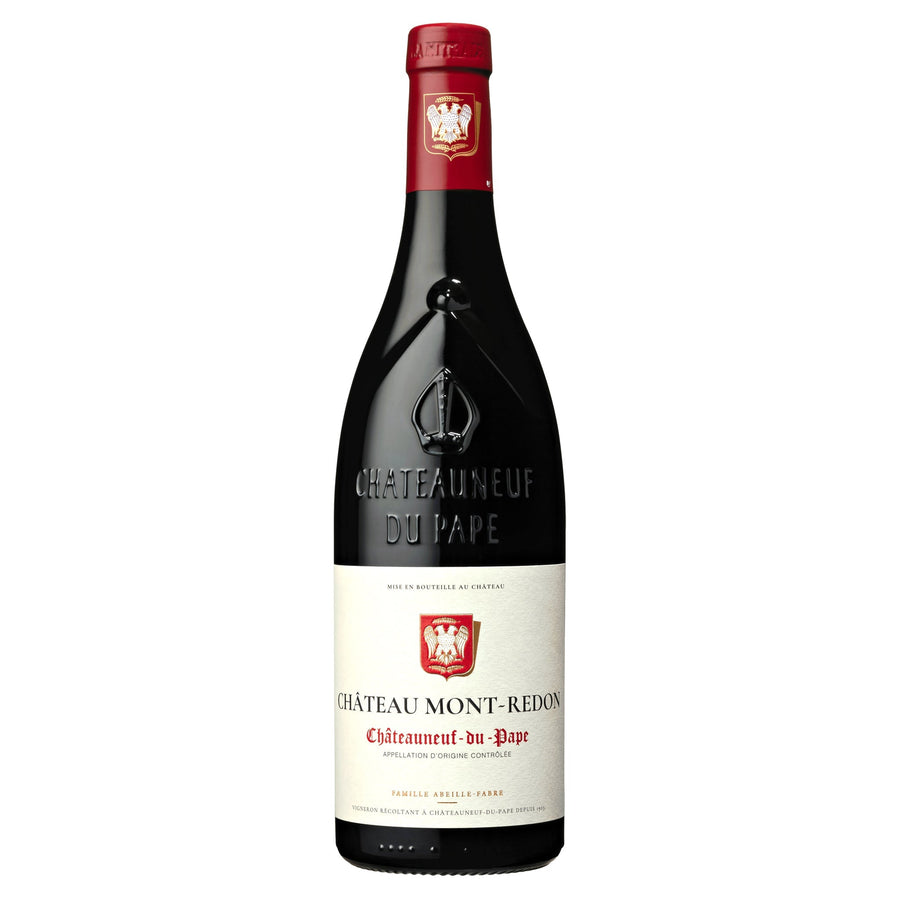
Henri Plantin acquired Mont-Redon in 1923, thirteen years before Châteauneuf-du-Pape was granted its appellation status in 1936. The estate's oldest vines were planted by Plantin in the 1920s and are now nearly a century old. Plantin's strategic decision was to consolidate parcels surrounding the property — recognising the exceptional terroir of the Plateau de Mont-Redon, with its mix of fine sand (safres), limestone and the famous galets roulés (rolled pebbles) that define the appellation. Subsequent generations of the family extended the estate to its current 100 contiguous hectares, making Mont-Redon the largest single estate in Châteauneuf-du-Pape.
The estate's holdings extend beyond Châteauneuf-du-Pape: 15 hectares in the Côtes-du-Rhône appellation acquired in 1980, and a further 35 hectares in Lirac (the appellation across the Rhône from Châteauneuf) added in 1997. The Châteauneuf-du-Pape style is classical: Grenache-led blends complemented by Syrah, Mourvèdre, Cinsault and the eight other authorised varieties of the appellation, with the white Châteauneuf made from Grenache Blanc, Clairette, Roussanne and Bourboulenc.
The Mont-Redon Châteauneuf-du-Pape Rouge is the headline wine and the working trade Châteauneuf at this price tier. The Châteauneuf-du-Pape Blanc is among the more cellar-worthy white expressions of the appellation. Below Châteauneuf, the Côtes-du-Rhône and Lirac wines provide accessible entry-tier expressions. The estate also produces a Marc de Châteauneuf-du-Pape — the regional grappa equivalent — under the Mont-Redon Abeille et Fabre label.